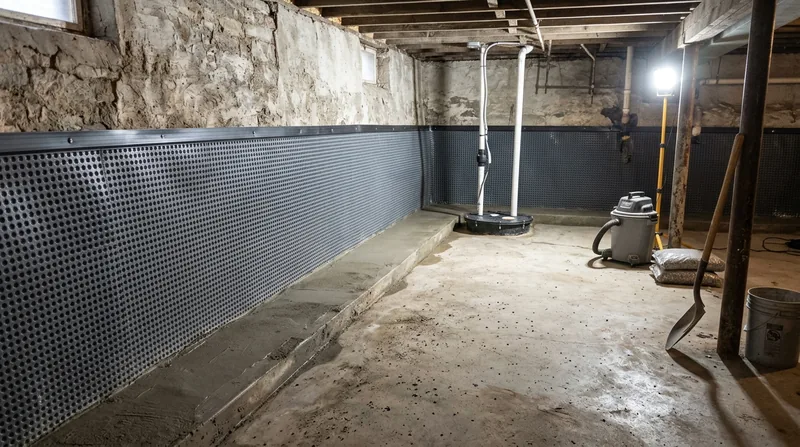




Basement Waterproofing in Ann Arbor starts with understanding what the ground is doing under your house. This city sits on glacial clay loam over sand and gravel, and the Huron River valley keeps the water table high from late winter into spring. Old West Side bungalows and foursquares from the 1900s to the 1920s still have fieldstone or early poured concrete walls, and those walls take on water differently than the poured basements in Pittsfield and Geddes Heights subdivisions. Snowmelt, slow-draining clay, and fast summer thunderstorm runoff all push water toward footing drains and low corners. Long freeze-thaw winters open hairline cracks that widen with every cycle. We trace the actual water path before we quote anything. If you are already seeing water on the floor, start with a free basement inspection so we can identify the source instead of guessing.
Why Basement Waterproofing Matters in Ann Arbor's Clay and River Valley
Ann Arbor basements fail for specific reasons, not random ones. The glacial clay soil here holds spring water like a sponge and releases it slowly against your foundation walls, which builds hydrostatic pressure. That pressure finds the weakest point: a cold joint at the floor, a hairline crack from the freeze-thaw cycle, or an old fieldstone mortar joint that has been softening for decades. In Burns Park and Kerrytown, the 1930s to 1950s colonials and Cape Cods often have full basements that stayed dry for years and then started weeping after a heavy June storm. In Westgate, the 1950s and 1960s ranches and split-levels frequently have footing drains that are clogged with clay and root intrusion. The dominant failure mode in Ann Arbor is not a single catastrophic crack. It is slow, seasonal hydrostatic seepage from late winter through spring, followed by storm-driven water after summer downpours.
- Efflorescence on block walls tells you water is moving through the masonry and leaving mineral deposits behind.
- A musty basement smell after rain usually points to moisture wicking through the wall-floor joint, not a plumbing leak.
- Water pooling in one low corner often means the footing drain is blocked or the grading slopes back toward the house.
- Hairline cracks that reappear after patching are a sign of ongoing freeze-thaw movement, not a bad patch job.
- Sump pump failure during a spring storm is the most urgent call we get, and a battery backup unit is the cheapest insurance against it.
If you recognize two or more of these signs, the problem is already active and waiting will not make it cheaper to fix.
Key info: In Ann Arbor's Old West Side, we regularly find fieldstone foundation walls with original mortar that has turned to sand. Sealing the surface alone will not hold. The wall needs repointing and a proper drainage path before any coating goes on.
For official guidance on permits and contractor requirements, check the City of Ann Arbor building department before work begins. Rules vary by jurisdiction and must be verified for your address.
How We Waterproof an Ann Arbor Basement, Step by Step
We do not sell one system to every house. A 1920s bungalow in Kerrytown with a fieldstone wall and a 1990s split-level in Pittsfield with a poured wall need different answers. The first step is always diagnosis: where is the water entering, and what is pushing it there? Then we match the method to the failure. Sometimes that is simple crack injection. Sometimes it is an interior perimeter drain and a new sump basin. Sometimes the honest answer is that the exterior footing drain is the real problem and excavation is the better long-term fix.
- We walk the basement and the exterior grade, looking for efflorescence, wall seepage, floor joint moisture, and downspout discharge points.
- We check the existing drain tile and sump basin for clay silt, root intrusion, and pump function.
- We map the water path and explain which repair addresses the cause rather than the symptom.
- We give you a written scope with the method, materials, and a clear price before any work starts.
- We install the system, test the pump and discharge line, and walk you through the check valve and maintenance.
Every job ends with a wet test and a walkthrough so you know exactly what was installed and how to spot a problem early.
Key info: A homeowner in Saline called us after two summers of water on the basement floor. The previous fix was a coat of sealer on the wall. We found the footing drain packed with clay and the sump basin dry because the pump had burned out. A new interior drain tile system and pump solved what sealer never could.
Waterproofing Methods We Use in Ann Arbor
The right method depends on the wall type, the water source, and how much hydrostatic pressure the site generates. Here is how the main approaches compare for Ann Arbor housing stock.
| Approach | Description | Best for |
|---|---|---|
| Interior perimeter drain | A drain tile system cut into the floor along the footing, leading to a sump basin and pump. | Hydrostatic seepage at the wall-floor joint, finished basements, and homes where exterior excavation is impractical. |
| Exterior waterproofing | Excavation to the footing, membrane and dimple board on the wall, new footing drain and gravel. | Failed original footing drains, bowing walls, and homes where the water source is clearly outside the wall. |
| Crack injection | Epoxy or polyurethane injected through ports into a hairline or structural crack. | Isolated poured-concrete cracks that are not part of a broader drainage problem. |
| Wall sealing and vapor barrier | Parging, masonry sealer, and a dimple board or vapor barrier to manage moisture migration. | Damp walls, efflorescence, and moisture control in basements that are otherwise dry. |
| Sump pump and battery backup | A correctly sized pump, check valve, discharge line, and battery backup for storm outages. | Any basement with a drain tile system, especially where spring storms cause power outages. |
We will tell you plainly when a simple crack seal is enough and when the real problem is hydrostatic pressure that needs a drainage system. If a wall is bowing, that is a structural issue and we bring in bowing wall repair methods like carbon fiber straps or wall anchors before waterproofing.
Basement Waterproofing Cost in Ann Arbor: What to Expect
Most Ann Arbor homeowners want a number before they want a lecture, so here is the honest range. Simple crack injection and wall sealing start lower. A full interior drain tile system with a sump pump typically starts around From $2,500 and moves up with basement size, wall length, and whether the floor is finished. Exterior excavation is the highest-cost approach because it involves digging to the footing, replacing the drain, and restoring grade and landscaping. Cost factors include the square footage of the basement perimeter, the wall material (fieldstone and block take more labor than poured concrete), access to the foundation, whether a new sump basin must be cut, and whether the discharge line needs to run to a legal daylight or storm connection. Urgency matters too: a flooded basement in April costs more to address than a slow seep found in October. Getting two or three written estimates is smart, and any contractor who will not put the scope and price in writing is not worth your time. You can see the full breakdown on our pricing page.
What to Look for When Hiring a Waterproofing Contractor Near Ann Arbor
Basement waterproofing is a below-grade trade, and the contractor you hire should be able to explain the water path in plain language. Ask for proof of licensing and insurance, and do not accept a verbal assurance. Get at least two or three estimates in writing, each with a clear scope, materials, and price. Ask for references from jobs in Ann Arbor or a neighboring city and call them. Permits are commonly required for structural foundation repair, egress window cutting, and work that alters drainage or the sanitary connection of a sump discharge, and thresholds vary by jurisdiction, so confirm with the local building department. If you live in a subdivision with an HOA, check whether exterior work or discharge routing needs approval. A contractor who welcomes these questions is the one you want. Reach out through our contact page to schedule a free estimate.
One more thing: be wary of anyone who quotes a price over the phone without seeing the basement. The water path in a 1920s fieldstone wall is not the same as a 1980s poured wall, and a real estimate requires a look.
Basement Waterproofing in Ann Arbor: Pricing Guide
| Service | Price | Details |
|---|---|---|
| Crack injection and wall sealing | Starting at $650 | Covers epoxy or polyurethane injection for isolated cracks and surface sealing; price moves with crack length and wall access. |
| Interior drain tile system | Starting at $2,500 | Includes perimeter drain, sump basin, and pump; price rises with basement perimeter length and finished floor removal. |
| Exterior basement waterproofing | On estimate | Requires excavation to the footing, membrane, and new drain; scope depends on depth, access, and landscaping restoration. |
| Sump pump replacement | Starting at $450 | Includes pump, check valve, and discharge line connection; battery backup adds cost and is quoted separately. |
| Travel | Included | in Ann Arbor and surrounding areas, no separate call-out or mileage fee |
| Estimate | Free | Response within 24h at (734) 519-7691, no obligation to book |
Indicative pricing, the exact cost depends on square footage, finish, and site access. Free personalized estimate within 24h at (734) 519-7691.


