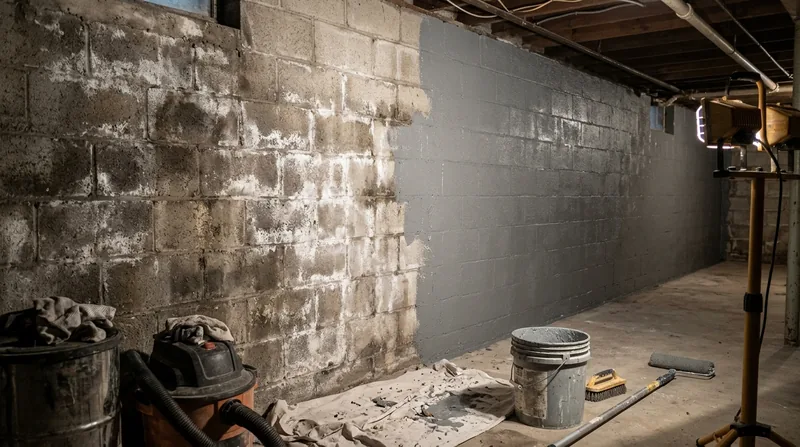




If you own a 1920s brick bungalow on the Old West Side or a 1960s split-level out in Pittsfield, your basement walls have been wicking groundwater for decades. Basement Wall Sealing in Ann Arbor starts with an honest read of what is actually happening at the wall, because glacial clay loam, a high spring water table in the Huron River valley, and long freeze-thaw winters each leave a different signature. We prep, clean, and seal damp masonry and poured walls, and we tell you straight when a sealer will do the job and when hydrostatic pressure means you need drainage instead. Nobody should sell you a coating over an active leak. Call (734) 519-7691 and we will walk the basement with you, look at the efflorescence line, and point at the wall where the water is actually entering. You can read the broader scope on our basement waterproofing page before you decide anything.
Why Ann Arbor Basements Stay Damp: Clay, Water Table, and Old Masonry
The ground here is glacial clay loam over sand and gravel, and clay does not drain, it holds. From late winter into spring the Huron River valley keeps the water table high, so footing drains that were adequate in 1955 sit below a saturated column of soil. Add snowmelt running down graded lawns and fast summer thunderstorm runoff, and water stacks up against the foundation faster than weeping tile can take it away. The freeze-thaw cycle then opens hairline cracks in poured and block walls, which is why so many Burns Park and Kerrytown basements show a white efflorescence line at the same height every year.
- Fieldstone and early poured walls in Old West Side bungalows absorb water through the mortar and the stone itself, not just through cracks.
- Block walls in 1950s Westgate ranches show damp patches at the mortar joints where the block cores fill and hold moisture.
- Poured walls in Pittsfield and Geddes Heights subdivisions crack at the cold joint and at tie holes when the freeze-thaw cycle works on them.
- Low corners and floor-wall seams collect water first when the water table rises, long before the middle of the wall shows anything.
That pattern is why we inspect before we quote, and why the answer is not always a sealer. Washtenaw County publishes permit guidance for foundation and drainage work through its official county site, and we point you there when a job crosses into structural or drainage territory.
Key info: A 1918 foursquare near Eberwhite Woods with damp walls and a clean floor is usually a sealing and grading job. The same house with water standing at the floor seam after a March rain is a hydrostatic pressure problem, and a coating alone will blister off within two seasons.
How We Seal Basement Walls in Ann Arbor, Step by Step
We do not spray sealer on a dirty, wet wall and call it done. The prep is most of the work, and on old Ann Arbor masonry it is nearly all of it. Here is the sequence we run on a typical interior wall sealing job, from the first walkthrough to the final cure check.
- We inspect the full perimeter, map the efflorescence line, and check the floor-wall seam and any crack for active seepage.
- We test for hydrostatic pressure by watching the wall through a rain event or a wet spring week before recommending a sealer.
- We remove efflorescence, loose parging, and failed prior coatings down to sound masonry or concrete.
- We fill cracks and tie holes with the right material, epoxy injection for structural cracks and polyurethane injection for active leaks.
- We apply a penetrating sealer on damp masonry or a membrane sealer on poured walls, depending on what the wall needs.
- We correct grading and downspout extensions at the exterior so the water stops arriving at the wall in the first place.
- We document the work and check the cure, then tell you what to watch for next spring.
If the inspection shows the wall cannot be dried from the inside, we say so and talk through the interior drain tile system instead of selling you a coating that will fail.
Key info: On a 1958 ranch in Westgate we found the block cores holding water from a downspout that dumped at the corner. We extended the downspout, sealed the damp wall with a penetrating sealer, and the basement stayed dry through the next spring melt. On a Saline walkout with water at the floor seam, the honest answer was drainage, not sealer.
Sealing Approaches We Use on Ann Arbor Basement Walls
No single product fits every wall in this town. Fieldstone, block, and poured concrete each behave differently under the same water table, so we match the approach to the wall and to what the moisture reading tells us.
| Approach | Description | Best for |
|---|---|---|
| Penetrating sealer | Sinks into the masonry and blocks capillary absorption without trapping moisture behind a film. | Damp fieldstone and block walls with no standing water. |
| Membrane sealer | Builds a flexible waterproof film over sound poured concrete and bridges hairline cracks. | Poured walls in Pittsfield and Geddes Heights with surface seepage. |
| Epoxy injection | Ports are set along the crack and structural epoxy is pumped in to rebond the concrete. | Dry, stable structural cracks in poured walls. |
| Polyurethane injection | Flexible foam expands into the crack and stays sealed through movement and wet cycles. | Active leaks and cracks that move with freeze-thaw. |
| Parging repair | Failed parging is cut back and replaced so the sealer bonds to sound material. | Old West Side and Kerrytown masonry with crumbling surface coat. |
We pick from this list after the inspection, not before, and we explain why one approach beats another on your specific wall.
Basement Wall Sealing Cost in Ann Arbor: What to Expect
Most interior wall sealing work in Ann Arbor starts around $1,500, and that figure covers a typical basement perimeter with prep, efflorescence removal, crack filling, and one sealer application. The number moves up with wall length, how much failed parging or old coating has to come off, whether injection is needed at active cracks, and how much grading and downspout work the exterior needs. A fieldstone wall in an Old West Side bungalow takes more labor than a clean poured wall in a 1990s Pittsfield subdivision, and the quote should reflect that honestly.
Get two or three written estimates and make sure each one states the prep steps, the sealer type, and whether injection is included or billed separately. A low number that skips prep is not a comparison, it is a callback waiting to happen. Our full pricing overview lays out how we build the number so you can compare line by line.
Hiring a Basement Wall Sealing Contractor Near Me in Ann Arbor
Ask three questions before anyone touches your wall. Are you licensed and insured, can you show me a certificate, and what exactly does your prep include? A contractor who cannot answer the prep question plainly is planning to roll sealer over efflorescence, and that coating will fail. Check references from jobs in Ann Arbor or the surrounding towns, and ask whether the estimate is written and itemized.
Permits matter when the work crosses into structural repair, egress cutting, or altering drainage and sump discharge connections, and thresholds vary by jurisdiction, so confirm with the city building department before work starts. If your home sits in a historic district or an HOA, check those rules too. Reach us through the contact page and we will set up a free inspection and a written estimate.
Basement Wall Sealing in Ann Arbor: Pricing Guide
| Service | Price | Details |
|---|---|---|
| Single wall or small area sealing | Starting at $1,500 | Covers prep, efflorescence removal, crack filling, and one sealer application on a limited wall run. |
| Full basement perimeter sealing | Starting at $2,800 | Full perimeter prep and sealing; price rises with wall length, failed parging, and old coating removal. |
| Crack injection add-on | Starting at $450 | Epoxy or polyurethane injection at active cracks, priced per crack and by injection port count. |
| Complex or large-scale job | On estimate | Fieldstone walls, heavy parging failure, or combined sealing and drainage need an on-site look first. |
| Travel | Included | In Ann Arbor and surrounding areas, no separate call-out or mileage fee. |
| Estimate | Free | Response within 24h at (734) 519-7691, no obligation to book. |
Indicative pricing, the exact cost depends on square footage, finish, and site access. Free personalized estimate within 24h at (734) 519-7691.


